Reliable Pest Control in Raleigh, NC

Bed Bug Control Services

Oak City Pest Control provides professional bed bug control in Raleigh, NC, and surrounding Triangle communities. Our team carefully inspects your home, identifies where bed bugs are hiding, and develops a targeted treatment plan based on the extent and location of the infestation.

Bed Bug Pest Control

Our Experts Target at the Source

Bed bugs are small, persistent pests that can hide in mattresses, furniture, baseboards, cracks, and other areas throughout a home. Because they spread easily and can be difficult to eliminate without addressing every stage of an infestation, finding bed bugs is a problem that should be handled quickly.

These pests can spread quickly from one hiding place to another, and delaying treatment may allow an infestation to become more difficult to manage.

Oak City Pest Control provides professional bed bug treatment in Raleigh, NC, with solutions based on the conditions inside your home. We’ll inspect for activity, determine where bed bugs are hiding, and develop a plan for controlling the infestation.

Our staff providing affordable exterminator service for a client.

Our Bed Bug Treatment Approach

Inspect

Every service begins with a detailed inspection of your home and property. Our technician looks to evaluate the extent of activity, affected rooms, potential hiding areas, and conditions that could make treatment more difficult. This allows us to develop a treatment strategy specific to your home, and not a one-size-fits-all solution.

Target

Once bed bug activity is identified, our treatment plans focus on the areas where bed bugs are living, hiding, and traveling. This helps ensure treatment is directed where it is needed most, and we take care of the problem to give you peace of mind in your home.

Secure

Bed bugs can easily spread through belongings, furniture, bedding, and other household items. During the treatment process, we provide guidance on steps that may be needed to help contain the infestation and prepare affected areas. This may include laundering certain items, reducing clutter, limiting movement of belongings between rooms, and making treatment areas accessible.

Report

Clear communication is an important part of every service visit. After treatment, we provide a clear summary of what was found during the inspection, what treatments were performed, and any recommendations that may help prevent future bed bug activity.

Monitor

Bed bug control often requires continued observation because eggs, newly hatched nymphs, or hidden activity may not be immediately visible. During follow-up visits, we continue to monitor treated areas for signs of continued bed bug activity and determine whether additional treatment is needed. Our goal is to keep your home protected.

Maintain

Once the infestation has been controlled, prevention becomes the focus. Our ongoing pest control services are designed to maintain protection against bed bugs and reduce the chance of bed bugs being reintroduced. This includes guidance for travel, secondhand furniture, clutter reduction, mattress encasements, and recognizing early warning signs.

Identify

Common Bed Bug Species in NC

Bed Bug | Bed Bug Pest Control Services

Common Bed Bug

Cimex lectularius

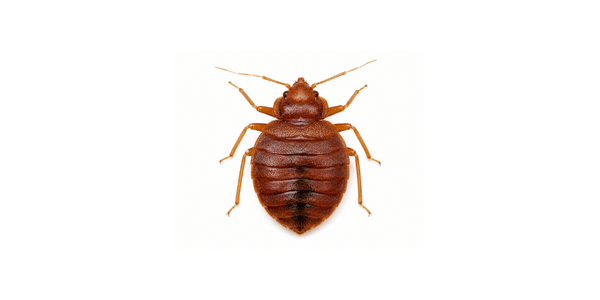
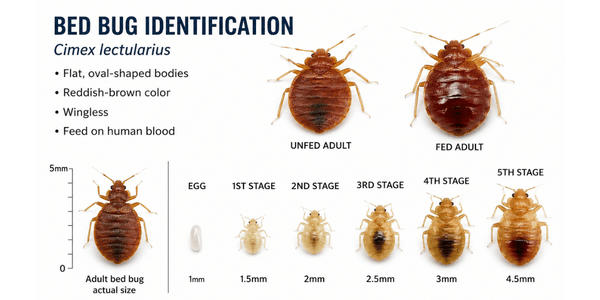
Common bed bugs are the primary bed bug species found in homes throughout North Carolina. Adults are small, flat, oval-shaped insects with reddish-brown bodies and typically grow to about ¼ inch long. Bed bugs cannot fly or jump; instead, they crawl and hide in tight spaces near where people sleep or rest. They commonly hide along mattress seams, box springs, bed frames, upholstered furniture, baseboards, and cracks and crevices.

Because bed bugs are skilled hitchhikers, they can enter homes on luggage, clothing, furniture, and other belongings and spread from one area to another.
How Do I Identify Bed Bugs?

The common bed bug is a small, wingless insect that feeds on blood. Adult bed bugs are typically about the size of an apple seed, with flat, oval bodies that are brown when unfed and more reddish-brown after feeding. Younger bed bugs, called nymphs, are much smaller and can be difficult to see.

Bed bugs are most often found close to areas where people sleep or spend long periods of time. Check along mattress seams, box springs, bed frames, headboards, nightstands, and upholstered furniture, paying close attention to small cracks and crevices. As an infestation grows, bed bugs may also hide along baseboards, behind wall décor, inside furniture joints, and in other protected spaces throughout the room. Look for more than just live bugs—dark spotting, shed skins, tiny eggs, and reddish stains on bedding can also indicate bed bug activity.

Proudly Serving

Raleigh, Cary, Durham, Clayton & Surrounding Areas

We proudly serve the following cities:

Service area map for North Carolina by Oak City Pest Control.
Bed Bug Pest Control

Frequently Asked Questions

Seeing a live bed bug is the clearest evidence, but other signs can include dark spotting, reddish stains, shed skins, eggs, or activity around mattress seams, bed frames, and upholstered furniture. Bites alone aren’t enough to confirm an infestation because reactions vary significantly from person to person. If you’re unsure, professional identification can prevent you from treating the wrong pest.

Bed bugs have little to do with how clean your home is. They typically arrive by hitchhiking on luggage, furniture, clothing, bags, or other belongings. Once introduced, they stay close to areas where people regularly sleep or rest. Even an exceptionally clean home can develop a bed bug infestation if the insects are accidentally brought inside.


Yes. Bed bugs can crawl between rooms and may also be unintentionally transported on clothing, furniture, bedding, boxes, or other belongings. Moving items out of an infested room without inspecting or treating them can make the problem worse. This is why NC State recommends moving as few belongings as possible before and during treatment.


Not necessarily. Finding bed bugs does not automatically mean your mattress or furniture must be discarded. Depending on the condition and level of infestation, mattresses and box springs may be treated and protected with appropriate bed bug-proof encasements. A professional inspection can help determine what can be treated and what, if anything, should be discarded.


Absolutely. Bed bugs can hide in box springs, bed frames, headboards, couches, upholstered chairs, baseboards, furniture joints, cracks, and other protected spaces. As populations increase, they may spread farther from the bed. Treating only a mattress can therefore leave other areas of an infestation untouched.

Foggers or “bug bombs” should not be relied upon as the primary method for controlling bed bugs. The EPA notes that foggers may not reach the cracks and crevices where bed bugs hide, and improper use can create health and fire risks. Successful bed bug management usually requires a more comprehensive strategy.

There isn’t one timeline that applies to every home. The size of the infestation, number of affected rooms, hiding locations, preparation, treatment method, and follow-up can all affect how long control takes. EPA notes that bed bug elimination can take weeks to months in some situations and may require repeated treatment and monitoring.

Schedule a professional inspection when you find a live bed bug, repeatedly notice signs of activity, continue waking up with unexplained bites alongside other evidence, or suspect an infestation has spread beyond one area. Because several insects can be mistaken for bed bugs, confirming the pest first can save considerable time and prevent unnecessary treatment.

Bed bug problems?
We can help.

Start with a free quote and get fast, professional service from your local experts in Raleigh, Cary, Clayton, Durham, Garner, Morrisville, Apex, Holly Springs and beyond.

(984) 350-1141