Millipede Control Services
Oak City Pest Control provides professional millipede control in Raleigh, NC, designed to identify where activity is coming from, target problem areas, and address the conditions around your home that may be contributing to recurring millipede activity. We proudly serve Raleigh, Cary, Apex, Durham, Clayton, Garner, Morrisville, and Holly Springs with reliable, long-term protection.
Our Experts Target at the Source
Finding a few millipedes outdoors isn’t unusual in North Carolina. Finding dozens crawling across your patio, garage, basement, or inside your home is another story.
Millipedes thrive in dark, damp environments with plenty of decaying organic material. When conditions become too wet, hot, or dry, they may leave these hiding places and migrate in large numbers, sometimes finding their way indoors through small openings around foundations, doors, windows, vents, and utility penetrations.
Oak City Pest Control provides professional millipede control in Raleigh, NC, with solutions focused on the source of the activity, and not simply the millipedes you can see.
Our Millipede Treatment Approach
Inspect
Every service begins with a detailed inspection of your home and property. Our technician looks for signs of millipede activity, potential entry points, excess moisture, heavy organic material, and the outdoor areas where populations may be developing.
Target
Once millipede activity is identified, we apply targeted treatments to areas contributing to the problem. Treatment recommendations are based on your property and the conditions we are seeing rather than taking a one-size-fits-all approach.
Secure
Once millipede activity is treated, we help identify potential entry points and conditions that may be making it easier for millipedes to reach your home. this can include door sweeps, cracks, foundation openings, drainage areas, mulch, vegetation, and moisture management.
Report
Clear communication is an important part of every service visit. After treatment, we provide a clear summary of what was found, where millipede activity appears to be originating, what was addressed, and any property conditions that may need attention.
Monitor
Millipede activity can change quickly with weather and moisture conditions in North Carolina. During follow-up visits, we continue to monitor the property for signs of recurring activity and determine whether additional areas need attention.
Maintain
Consistent pest control helps prevent small issues from becoming larger infestations. Our ongoing service plans provide scheduled treatments designed to make the areas immediately surrounding your home less favorable for millipedes. We also provide recommendations for reducing excess moisture, organic debris, heavy mulch, and other conditions that encourage millipede populations.
Common Millipede Species in NC

Garden Millipede
Oxidus gracilis
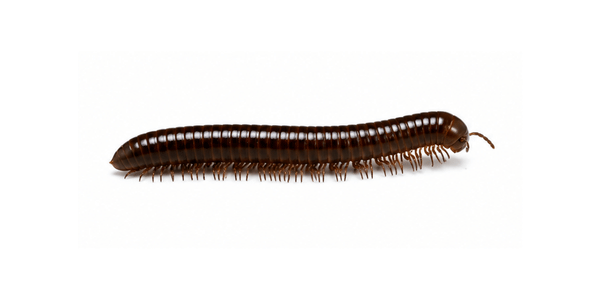
Garden millipedes, also known as the greenhouse millipede, are one of the most relevant species for homeowners because it can appear in large numbers around patios, driveways, foundations, and inside homes.
It has a relatively small, flattened, brownish body and prefers dark, cool, damp areas with plenty of organic material. Look for them around mulch, compost, rotting logs, stones, and moist soil. Heavy rain can drive large populations out of these areas and toward homes.
Virginia Cherry Millipede
Apheloria virginiensis
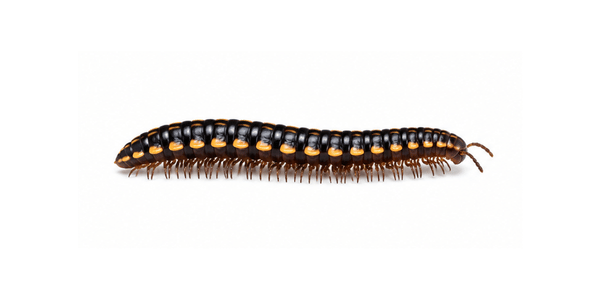
The Virginia cherry millipede is a distinctive flat-backed millipede documented in North Carolina's Piedmont, including Durham and Chatham counties. Its dark body and contrasting yellow markings make it much more noticeable than the smaller garden millipede.
These millipedes are primarily associated with wooded environments and leaf litter rather than indoor infestations, but Raleigh-area homeowners may encounter them around wooded properties, landscaping, logs, rocks, and other moist outdoor areas.
American Giant Millipede
Narceus americanus
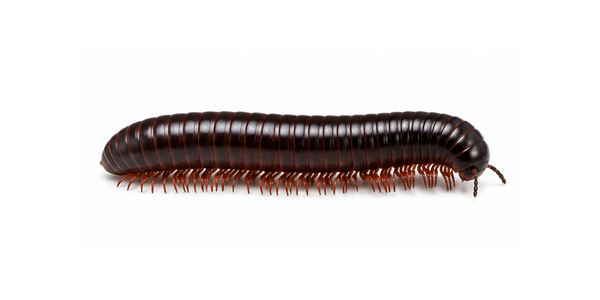
The American giant millipede is one of the largest and easiest millipedes for North Carolina homeowners to recognize. It has a long, thick, cylindrical body and is generally dark brown to reddish-brown. Despite its intimidating size, it is primarily an outdoor decomposer.
It prefers moist organic environments and is commonly found in humus, beneath decaying logs, and in hardwood areas. The species complex has been documented throughout North Carolina, including Wake, Durham, Chatham, and other Piedmont counties.
Raleigh, Cary, Durham, Clayton & Surrounding Areas
We proudly serve the following cities:
Frequently Asked Questions
Are millipedes dangerous?
Millipedes generally don’t bite or sting and aren’t known to transmit diseases. Some species can release defensive secretions when disturbed, however, which can have an unpleasant odor and potentially irritate the skin or eyes. It’s best to avoid unnecessary handling and wash your hands after contact.
Why am I suddenly seeing hundreds of millipedes?
Large millipede movements are often triggered by changing moisture conditions. Extended rain can drive them from saturated soil, while hot, dry weather can cause them to move in search of moisture. If your property already has a large population living in mulch, leaf litter or other organic material, these migrations can make it seem as though millipedes appeared overnight.
Do millipedes damage homes?
Millipedes don’t infest or consume dry, structurally sound wood, clothing, or household food. They’re primarily decomposers that feed on decaying organic material outdoors. Their presence indoors is generally a nuisance rather than evidence of structural damage.
Why do I keep finding dead millipedes inside?
Millipedes require moisture to survive. Those that accidentally wander into dry indoor environments often die relatively quickly. You can vacuum or sweep up individual millipedes, but repeated activity indicates that the outdoor source or entry points should be investigated.
What's the difference between a millipede and a centipede?
Millipedes generally have rounded or flattened segmented bodies with two pairs of short legs on most body segments and move relatively slowly. Centipedes have one pair of legs per body segment, typically have noticeably longer legs, and move much faster.
Does mulch attract millipedes?
Mulch can create the dark, moist environment and decaying organic material that millipedes prefer. That doesn’t mean homeowners need to eliminate mulch completely. NC State recommends avoiding excessive accumulation and keeping mulch approximately 6 to 12 inches away from foundation walls to help reduce pest activity near potential entry points.
Can millipedes reproduce inside my house?
Typical indoor living spaces generally don’t provide the consistently moist, organic conditions millipedes need. Millipedes that enter homes are usually migrating from outdoor populations rather than establishing a traditional indoor infestation. Damp crawl spaces and basements, however, are worth inspecting because moisture conditions can make those areas more favorable.
How do I get rid of millipedes around my house?
Long-term control starts with reducing the conditions supporting millipedes: excess moisture, leaf litter, heavy mulch, decaying organic matter, debris, and accessible entry points. Professional pest control can then target areas of concentrated activity while identifying conditions around the property that may be contributing to recurring problems. NC State emphasizes habitat and moisture correction as the most important long-term control measures.
Millipede problems?
We can help.
Start with a free quote and get fast, professional service from your local experts in Raleigh, Cary, Clayton, Durham, Garner, Morrisville, Apex, Holly Springs and beyond.