Reliable Pest Control in Raleigh, NC

Centipede Control Services

At Oak City Pest Control, we provide professional centipede control in Raleigh, NC, and surrounding Triangle communities of Cary, Apex, Durham, Clayton, Garner, Morrisville, and Holly Springs. Our team identifies areas of activity, addresses contributing conditions, and develops targeted treatment strategies to help keep centipedes from becoming a recurring problem.

Centipede Pest Control

Our Experts Target at the Source

Centipedes are often a sign of conditions that make your home attractive to moisture-loving pests. Treating the centipedes you see may provide temporary relief, but effective control requires understanding why they are appearing in the first place.

Our technicians inspect areas where centipedes are commonly found, including bathrooms, basements, crawl spaces, garages, and foundation openings. We look for excess moisture, potential entry points, sheltered hiding places, and other pest activity that may be providing a food source.

By identifying these contributing factors, Oak City Pest Control can develop a treatment plan that addresses current activity while helping reduce the likelihood of recurring centipede problems.

Our staff providing affordable exterminator service for a client.

Our Centipede Treatment Approach

Inspect

Every service begins with a detailed inspection of your home and property. Our technician begins by examining areas where centipedes have been spotted, including bathrooms, basements, garages, crawl spaces, and exterior foundation areas. We look for moisture problems, entry points, outdoor hiding places, and evidence of other pests. This allows us to develop a treatment strategy specific to your home, and not a one-size-fits-all solution.

Target

Once centipede activity is identified, we develop a targeted treatment strategy for centipedes. This may include appropriate applications in areas where centipedes travel or hide, with particular attention to entry points and sheltered locations. We aim to take care of the problem to give you peace of mind in your home.

Secure

During the treatment process, we provide guidance on steps that may be needed to help prevent centipedes from entering or remaining inside your home. Recommendations may include sealing cracks, improving door sweeps, reducing excess moisture, and removing debris or vegetation that provides shelter near the foundation.

Report

Clear communication is an important part of every service visit. After treatment, our technicians explain what we found, the treatments performed, and any conditions contributing to centipede activity. We also provide practical recommendations to help homeowners reduce future sightings.

Monitor

During follow-up visits, we continue to monitor treated areas for signs of continued centipede activity. When appropriate, we assess whether additional treatment or preventive measures may be necessary. Our goal is to keep your home protected.

Maintain

Our ongoing pest control services are designed to maintain protection against centipedes and reduce the chance of centipedes returning inside your home. Ongoing pest management, moisture control, and routine property maintenance can help make your home less attractive to centipedes and the other small pests they feed on.

Identify

Common Centipede Species in NC

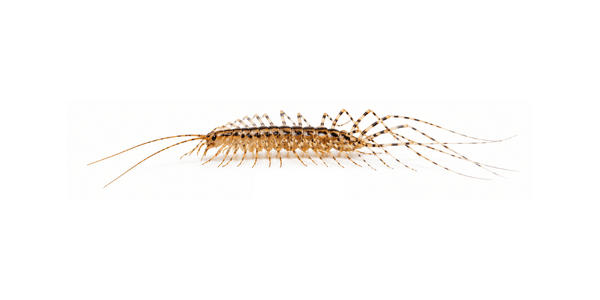
House Centipede | Centipede Control Services

House Centipede

Scutigera coleoptrata

House centipedes are among the most recognizable centipedes found inside North Carolina homes. They have yellowish-gray bodies with dark stripes and 15 pairs of exceptionally long, slender legs. Their bodies typically measure 1 to 1.5 inches long, although their extended legs make them appear much larger.

Known for their quick movements, house centipedes prefer damp, sheltered areas such as bathrooms, basements, crawl spaces, and garages, where they feed on spiders, silverfish, cockroaches, and other small pests.
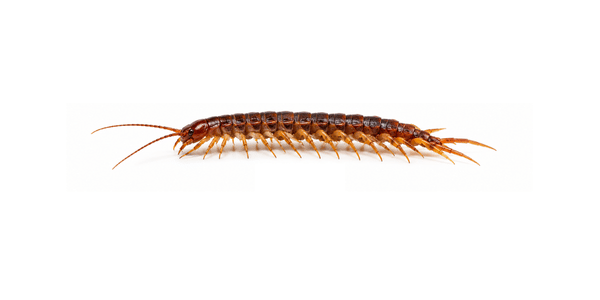
Stone Centipede | Centipede Control Services

Stone Centipede

Lithobius forficatus

Stone centipedes have flattened, reddish-brown bodies with 15 pairs of relatively short, sturdy legs, giving them a more compact appearance than house centipedes. Typically measuring around 1 inch long, these centipedes prefer moist outdoor environments and are commonly found beneath rocks, logs, mulch, and leaf litter.

Although they generally remain outdoors, stone centipedes may occasionally enter North Carolina homes through foundation cracks, gaps beneath doors, or other openings.
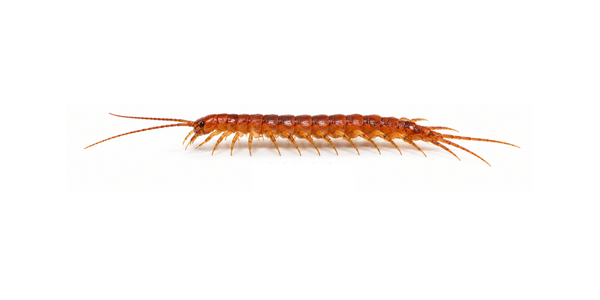
Bark Centipede | Centipede Control Services

Bark Centipede

Scolopocryptops sexspinosus

Bark centipedes Bark centipedes have elongated, flattened bodies that range from reddish-brown to orange-brown, with shorter legs extending along their sides. Typically measuring a few centimeters long, these centipedes are primarily outdoor predators that thrive in moist, wooded environments. They are commonly found beneath loose tree bark, fallen logs, stones, and decaying leaves throughout North Carolina.

While bark centipedes rarely establish themselves indoors, they may occasionally wander into homes, particularly when outdoor moisture conditions change.

Proudly Serving

Raleigh, Cary, Durham, Clayton & Surrounding Areas

We proudly serve the following cities:

Service area map for North Carolina by Oak City Pest Control.
Centipede Pest Control

Frequently Asked Questions

Repeated centipede sightings may be associated with excess moisture, available prey, accessible entry points, or sheltered indoor spaces. A professional inspection can help identify which factors are contributing to activity in your home.

Yes. The house centipede (Scutigera coleoptrata) has been documented in North Carolina and can occur in homes and other buildings. It is especially recognizable by its long legs and fast movements.

Centipedes can use venom-bearing appendages to sting when threatened or handled, but most house centipedes avoid human contact. Larger species may cause more painful reactions. Avoid handling unidentified centipedes directly.

Bathrooms and basements often provide humidity, shelter, and access to small insects or other arthropods. Leaky plumbing, condensation, and poorly ventilated areas can make these spaces more suitable for centipedes.

Not necessarily. An occasional centipede does not confirm another infestation. However, frequent sightings may suggest that other small pests are present and providing a food source.

Centipedes generally have flattened bodies with one pair of legs per leg-bearing segment and are predators. Millipedes usually have more rounded or cylindrical bodies, with two pairs of legs on most body segments, and primarily feed on decaying organic material.

No. Centipedes do not eat wood, damage building materials, or create structural infestations. Their presence is primarily a nuisance, although larger species should not be handled because they can sting.

Consider professional assistance if centipedes appear frequently, occur in multiple rooms, or continue returning despite moisture and exclusion improvements. An inspection can help identify contributing conditions and determine whether treatment is appropriate.

Centipede problems?
We can help.

Start with a free quote and get fast, professional service from your local experts in Raleigh, Cary, Clayton, Durham, Garner, Morrisville, Apex, Holly Springs and beyond.

(984) 350-1141