If you live in Raleigh or close by in the Triangle, your yard probably has mulch beds, foundation shrubs, or a woodpile nearby. But landscaping can attract pests, as it can create excess moisture, shelter, food sources, and easy access some pests look for near your home.
Fall is when many Raleigh homeowners refresh pine straw and stock up on firewood for winter. Before you spread fresh straw or bring in more wood for cooler weather, check how close it will sit to your house. A few simple landscaping choices can make a big difference in keeping pests farther from your home.
Landscaping Can Attract Pests to Your Home, Right?
Yes, it can. Many pests already live in the soil and trees around your yard. However, your landscaping affects how close they settle to the house.
These pests look for damp soil, shelter, and access to the structure. Planting beds close to the foundation often offer all three. Dense beds can also keep you and a pest control technician from spotting early signs of termites or ants.
The goal of fall pest prevention isn’t to eliminate every insect from your yard. It’s to create some separation between the habitat pests prefer and the home you want to protect.
Does Mulch Near Your Foundation Attract Termites?
Finding termites in mulch does not usually mean the mulch brought them into your yard. Subterranean termites already live naturally in the soil throughout North Carolina.
The bigger concern is the environment mulch can create.
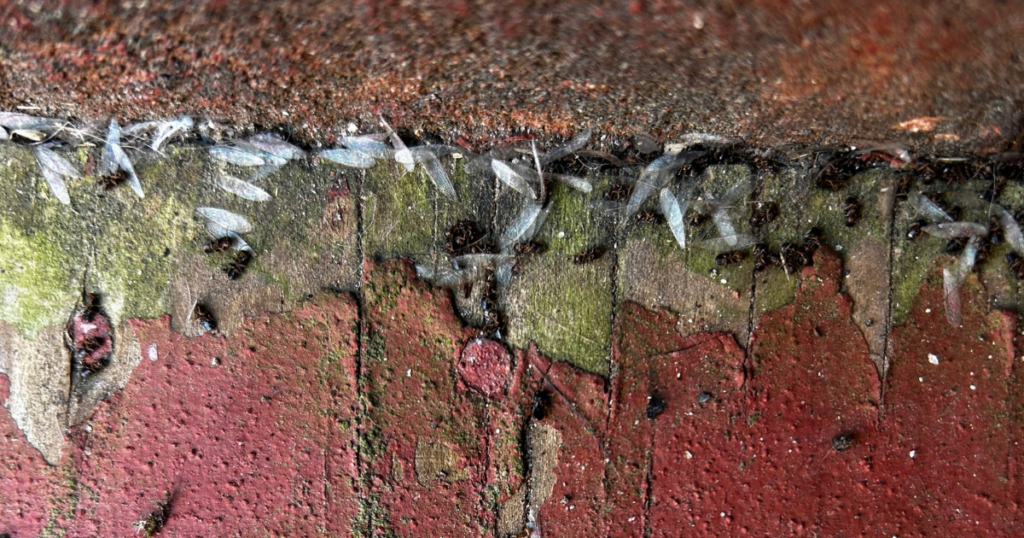
According to the UF/IFAS Extension, mulch piled more than 4 to 6 inches deep keeps soil moist and can help termites survive where colonies are established. It can also cover the foundation and hide the mud tubes termites build to reach the house. The recommendation is to maintain at least six inches between the siding and the soil line so homeowners can see the foundation and spot potential mud tubes.
You do not need to remove your mulch, though. Instead:
- Keep mulch in a thin layer near the foundation.
- Leave about 6 inches of visible foundation between the soil or mulch and your siding whenever possible.
- Aim sprinklers away from the foundation walls.
- Watch exposed foundation areas for termite mud tubes.
- Correct drainage problems that keep the soil beside the home wet.
If your home has received a soil treatment for termites, avoid digging into or adding new soil over the treated area around the foundation. Disturbing that soil can create a break in the treated zone.
If you spot mud tubes on your foundation, damaged wood, or other potential signs of activity, schedule an inspection. Oak City Pest Control’s services cover both termite inspection and treatment in Raleigh, NC, and surrounding areas.
Can Shrubs Touching Your House Bring Pests Inside?
Shrubs that touch your house can help some pests get inside. Ants can crawl along branches that lie against the siding or roof, then slip in through small gaps. Mosquitoes also like to rest in dense, shady vegetation around the home. Dense landscaping can also make it harder to inspect the foundation and can block airflow around vents.
Shrubs get bigger every year, so plan for a plant’s mature height and width 10-15 years out before putting it close to the house.
As part of your fall landscaping:
- Trim branches back from the siding and roof.
- Keep shrubs pruned away from the foundation vents so air can move through the crawlspace.
- Leave enough room between plants and the house to see the base of the wall and to inspect the foundation.
- Remove excessive leaves and organic debris beneath shrubs.
Where Do Mosquitoes Breed in a Landscaped Yard?
All mosquitoes need standing water to develop. Around Raleigh homes, even small containers that hold rainwater can become breeding sites. Asian tiger mosquitoes commonly use water-holding containers around the home. Eastern treehole mosquitoes breed in water that collects in tree cavities, and may also use containers around the home.
The CDC recommends emptying and scrubbing, turning over, or covering anything that holds water once a week. Cover rain barrels tightly or use mesh screening, and fill tree holes so they cannot collect rain. Clear leaves out of gutters and point downspouts away from the foundation.
These steps can help cut down on the mosquitoes breeding on your property. However, they will not stop the ones flying in from nearby yards. Asian tiger mosquitoes can fly 100 to 300 yards, so a neighbor’s bird bath can still add to the bites in your yard.
Adult mosquitoes spend most of the day in dense shrubs and other shady spots. Thick plantings beside a patio or deck can keep them close to where your family spends time. Professional mosquito control services include an inspection of your landscaping and treatment of the shaded areas where mosquitoes are active.
Where Should You Store Firewood to Avoid Pests?
That stack of firewood deserves attention before cooler weather arrives.
Wood stored directly on the ground can retain moisture and provide shelter for a variety of pests. Instead, store firewood on a rack off the ground and away from your house. Termites can move into wood that sits on bare soil, and damp wood can draw carpenter ants. Spiders, wood cockroaches, and millipedes may hide between the logs. A woodpile against the house can also give mice and rats shelter beside your walls.
A few simple habits can help:
- Bring in only wood you plan to burn soon.
- Wear gloves when you handle the logs.
- Avoid storing firewood against the house, on a porch or deck, or inside the garage.
- Keep the wood covered from above while allowing airflow.
- Store firewood off the ground.
- Keep the pile away from the house.
Most importantly, do not move a large supply indoors simply for convenience. Bringing firewood inside can also bring along insects hiding between the logs.
When a Professional Pest Inspection Makes Sense
Moving mulch and trimming shrubs can make your landscaping less likely to attract pests. Even so, these changes do not remove a termite colony or an ant nest that has already moved into your home.
Call for an inspection if you notice any of the following:
- You find termites in a woodpile stored near the house.
- Carpenter ants keep trailing along branches or siding.
- Wood around doors, windows, or porch columns feels soft or looks damaged.
- You still get mosquito bites after clearing out standing water.
- Pests repeatedly appear around the same part of the foundation.
- You are not sure whether conditions around your landscaping are contributing to a recurring problem.
A professional inspection can help separate normal outdoor pest activity from a problem that needs treatment.
Pest Control in Raleigh, NC
Oak City Pest Control can inspect your property for signs of pest activity and conditions around the foundation and landscaping that may be contributing to the problem. From there, a technician can recommend treatment based on what they find.
Oak City Pest Control serves homeowners in Raleigh, Apex, Cary, Clayton, Durham, Garner, Holly Springs, Morrisville, and the surrounding Triangle communities. Request a free quote to schedule an inspection of your home and yard.
Whether you’re dealing with an active pest problem or want to get ahead of seasonal activity, request a free quote from Oak City Pest Control to schedule an inspection of your home and property.
Request a Free Quote today!
Frequently Asked Questions From Raleigh Homeowners
Can new mulch or pine straw bring pests into my yard?
It can, but the risk is usually small. Bulk mulch and other landscaping materials can occasionally carry insects. However, termites rarely survive the chipping process, and those separated from their colony are unlikely to establish a new one.
Can ivy and groundcover attract rodents?
Yes, thick ground cover like English ivy gives rats and mice a hidden place to nest and travel close to your home. Keep ivy off the walls and trim ground cover back from the foundation so you can see the base of the house.
Do mosquito-repelling plants actually work?
Simply planting mosquito-repelling plants around a porch or deck has not been shown to provide reliable mosquito control. NC State Extension reports that scientific testing does not support claims that certain plants placed around outdoor living areas will keep mosquitoes away.